DISCLAIMER: In this article I am sharing my personal experience with my diabetes treatment regimen. I cannot emphasize enough that it is MY personal experience and all the observations are ANECDOTAL. Please check with your professional care givers about your own treatment choices.
I can’t change the direction of the wind, but I can adjust my sails to always reach my destination – Jimmy Dean
Then: In my article #5, I talked about my travails and tribulations dealing with my type 2 diabetes. I thought I knew everything about type 2 diabetes, treatment options, and how my body reacts to the environment (type of food, time of food taken, medications, dosage, my body’s reaction etc). I have been following the new medications that have been introduced since then and have tried some new ones, some with success but side effects and discontinued (Actos) and others with successful results (Jardiance and Trulicity).
Now: My HbA1c was around 7.2% when I added Trulicity to my regimen two years ago, and viola, my HbA1c came back down to 6.4% and stayed there till late last year. Now they are back to 7%. The professional opinion is that now my strategy ought to be keeping it below 7% rather than as low as possible below 7%. The reasons behind this thought process are 1) Ageing 2) Progressive Degeneration 3) Loss of efficacy of medications due to long term usage.
That was the summary of my conversation with my PCP on December 10, 2021. That got me thinking about my treatment regimen. It was obvious that none of the options are controllable, let alone reversible. It was one of those situations where epistemic ambivalence does not exist, (un)fortunately.
Fast forward December 2021. Jaya and I went on a trip to Spain, visited Madrid and Barcelona. The entire trip involved walking (on an average 15,000+ steps) and we were having small plate meals/snacks throughout the day. Even though our meals had chocolate croissants and contained other sugary eats my numbers came rather healthy on testing upon return. Encouraged by this development, I immediately dropped one of the medications and my numbers did not go south. Spurred by this development, my trip to Florida had a similar pattern of my diet. I theorized that my primary levers are maxed out, and I need to focus on secondary and tertiary levers for perhaps a marginal gain, a gain never the less, or according to some a Pyrrhic victory.
One can debate if tapas style meals is a primary lever or not but I am considering them as secondary, calorie control and portion control are certainly are identified as primary levers. I wanted to share my tertiary lever that is helping me to manage my diabetes better. In the last few years, CGM (Continuous Glucose Monitoring) have come into market place and I was somewhat dismissive about their use and benefit. I found out that they are recommended for those with Type II diabetes who are on insulin and insurance may not pay for it for those who are still on medication. I asked my PCP to prescribe anyway and as it happens my insurance agreed to cover 50% cost for these sensors. These sensors on the brand that I have, are attached to the back of the arm next to triceps and last for 14 days. There is another brand that allows the sensors to be attached on belly or thigh.
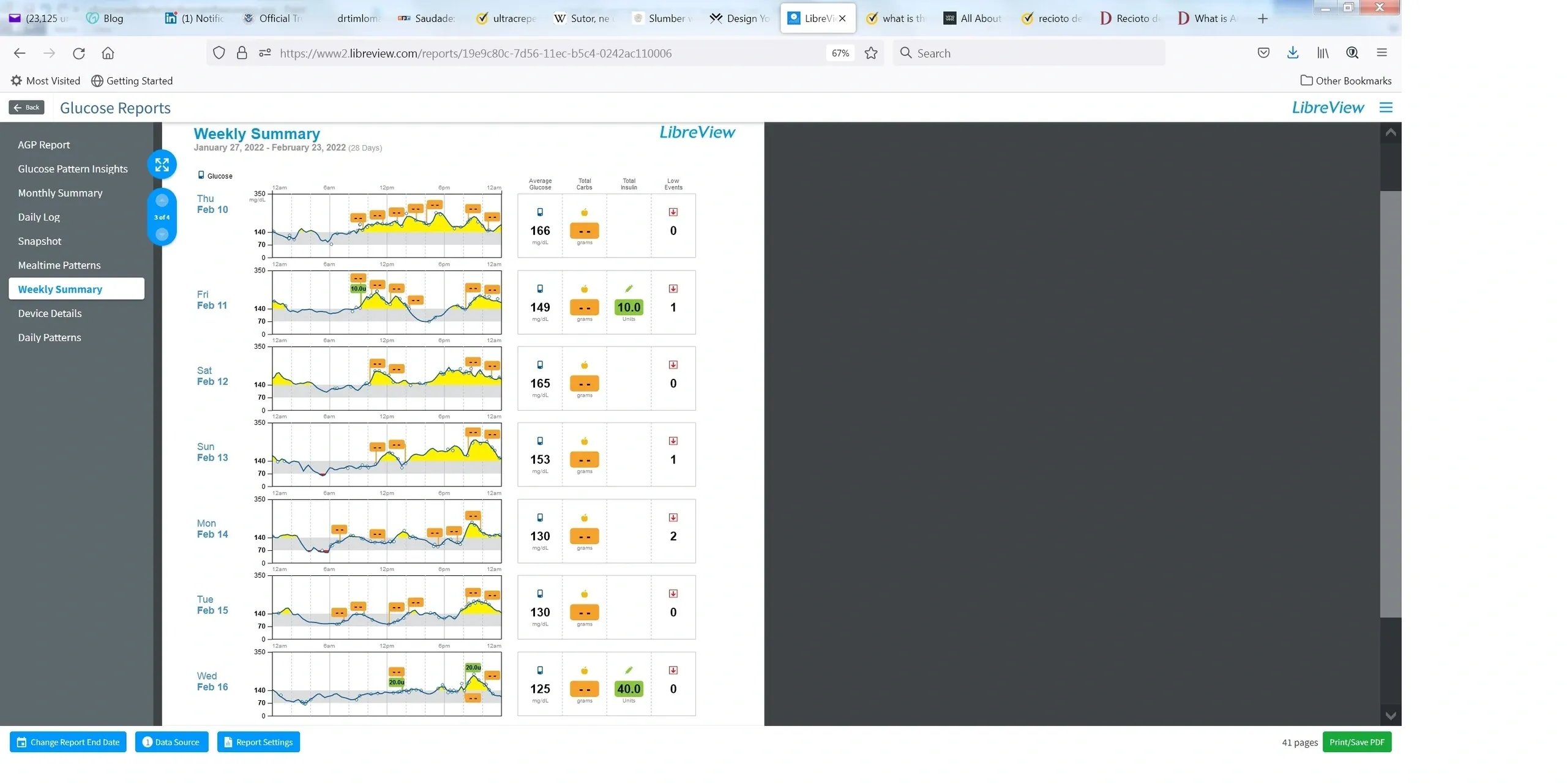
What I noticed in the 3rd week of using these sensors is that my sugar level in blood stream started to go up around 630ish PM in the evening leading up to dinner time. Naturally my post prandial (two hours after dinner) numbers were higher since the base (just before dinner is already high.
First time I read about chrono-biology was in 1998 in a whimsically titled book, Winston Churchill’s Afternoon Nap, by Jeremy Campbell. It was an up and coming field of science that seems to have faded away. But it did not in reality. Looks like Chronopharmacology seems to be the norm these days. One of the medications I take (Jardiance) has been subject to a study in Egypt (funded by NIH, USA) that studied the effect of taking the medication in the morning or in the evening. The study results were inconclusive but the data suggested a 2%-5% better excretion of sugars by the medication when taken in the evening.
I have been taking this medication in the morning since 2015 or so. This week, I switched to taking it in the evening and seeing a very encouraging post prandial (2 hours after dinner) spike or more like lack thereof.
The image below is a weekly report showing my glucose levels through the day and as you can see the yellow regions my sugar levels about 30 min prior to lunch/dinner leading up to the meals with Jardiance taken in the morning as I have been doing for the last seven years.
Once I switched the medication I have seen an improvement as I was hoping, and hoping against hope that there is no balloon effect as you can see in the below chart.
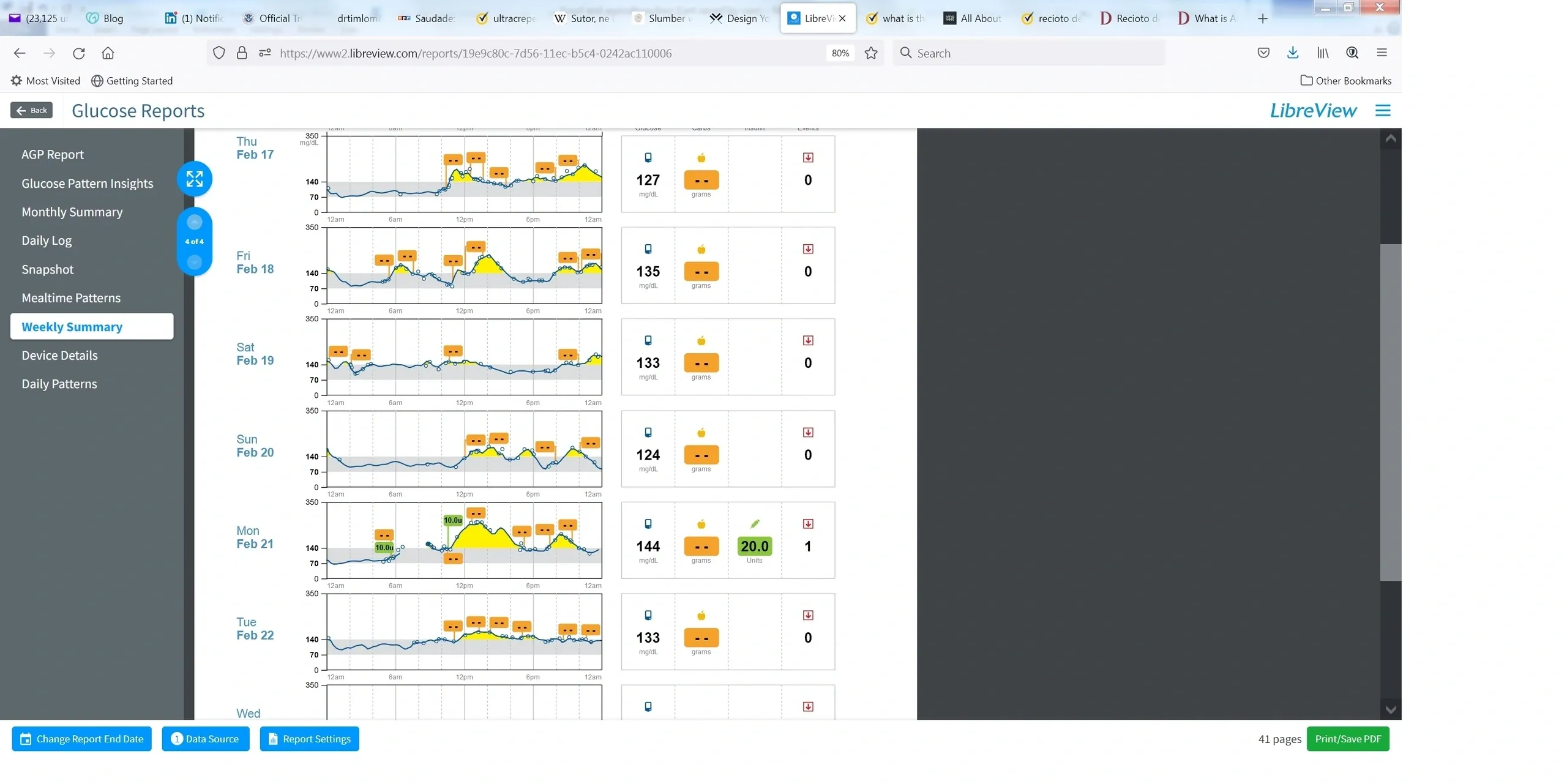
The day time spike on Feb 21 is the result of banana, macadamia pancake stack with sugar syrup on it. 😀
I see the benefit of CGM now. It is acting like a “deterrent” and providing me a level of discipline to maintain healthy eating habits. More importantly, I have come to know more about my body and how it reacts to various foods and the times of the day much better. If I think back to my weight management classes, they always suggested an apple about 30 min before a meal. It makes sense now, knowing what I know now.
Instead of anchoring around food intake and exercise, now I am getting a more detailed insight. That data was obtained after 135 scans which using my usual tester would have required that many finger pricks and instead I used 3 sensors (3 painless pricks, and 2 “ripping of the bandage” removals). Chronopharmacology to the rescue and CGM helped me to apply it.
P.S. I have deliberately chosen not to refer to photography in this article, since the photos in #5 are as relevant and I can draw parallels to photography techniques of HDR and built-in HDR, the former being equivalent of CGM and the latter for HbA1c test respectively.