Recently my wife, Jaya was telling me about a new game she has her students play, and how they have taken to the game. As she was explaining the game to me, it occurred to me that I talked about a variation of this topic previously (article #22). This game takes a different perspective on the same theme albeit with a different point of view. My previous article talks about keeping taking advantage of a situation that arose unplanned.
This game tells you that other views are INDEED present you should be planning to consider other situations. It actually proves (perhaps anecdotally) that there ARE indeed other views.
The image below is from a website called “which one doesn’t belong” ( wodb.ca )
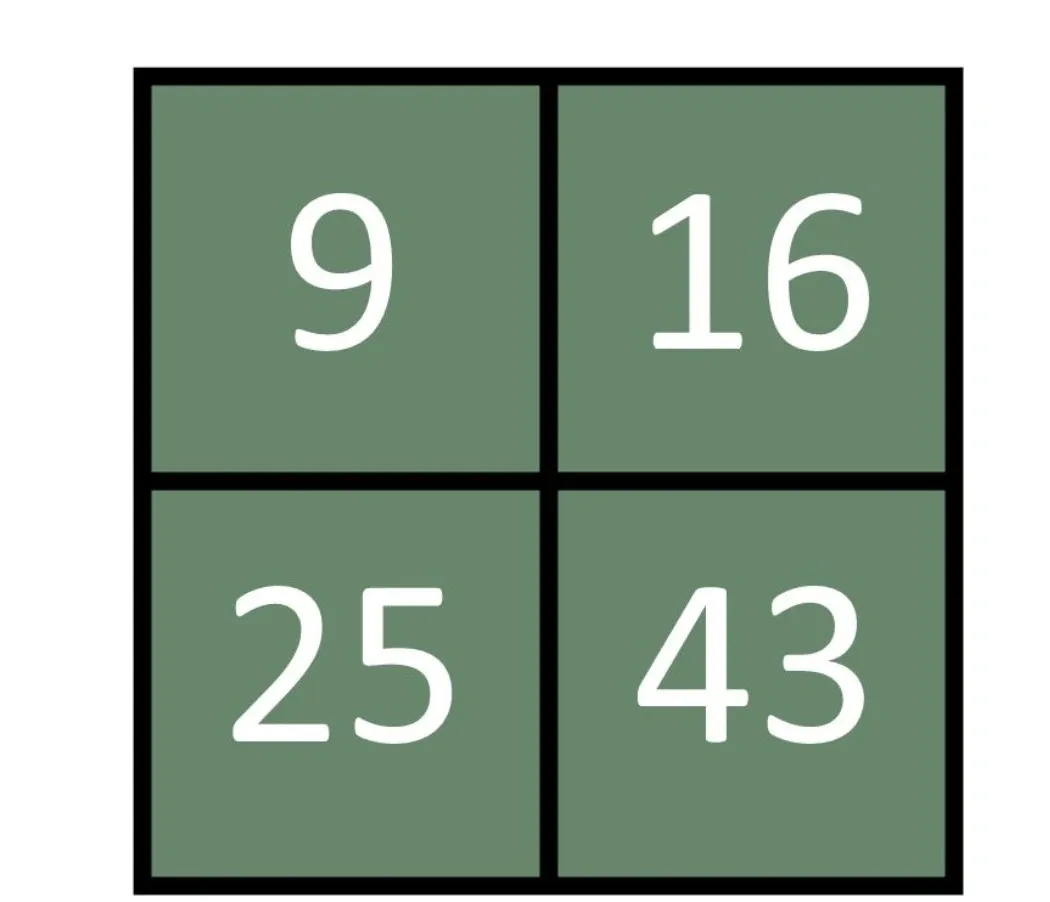
The above square of squares has numbers, and one has to identify which one does not belong. My immediate reaction (and a smug one) was that 43 doesn’t belong, because the other three are squares. Duh. My wife looked at me with that enigmatic smile that she reserves for me when she got me caught befuddled and said her students found out more than a dozen that combinations that don’t belong. An example she mentioned is that her students write 9 as 09 as a two-place number and using that criterion yet again 43 does not belong. If we use the even/odd number criterion, then 16 does not belong and so on.
Thus, the conversation leading up to me pondering how reliable are our first impressions. There is a saying that one cannot go wrong with one’s first impression, but can one go right with first impressions in more than one way and that too with some of the ways that are orthogonal to each other. This would be non-sequitur of first impressions are always the right one.
Let’s take this image below for example. At the first glance one may think that this is a bad image.

But as you peel the layers of details, i.e. change your point of view, you will see more details emerging and changes the landscape (pun intended) entirely. as you can see below, notwithstanding the artistic quality or lack thereof in the image.

While it is a very good guideline to rely upon the first instinct, and it makes sense since it is shaped by our own past experiences and learnings, I am beginning to wonder if I am painting myself into a corner by not letting new awareness to influence and shape my instinct.
Epilog: I can be forgiven for thinking my first image was a bad one given my reaction was drawn by what I saw if I were to see it for the first time. Since I was there, I knew there are more details to be drawn out, so I averted a first-time reaction trap. But the square of numbers in the first image had no such “hidden” details. It was a case of linear thinking on my part. The question I want to investigate further is one where linear thinking trap is applicable to only rational thinking or other kinds of thinking, mainly driven by emotional reactions. Emotions are not necessarily structured, so does linearity even applies in this case?