Please don’t confuse why me with woe is me. Why do I say that? Read on.
Why and me are two words as non-threatening as they can be. But put them together side by side and they have the power to haunt you for the rest of your life. I am paraphrasing the quote by the protagonist in one of my favorite rom-com movies. I hasten to add that this is a more poignant and serious version of the original quote.
Two of my childhood friends, who are very avid hikers, one of them almost hiked Kilimanjaro, and the other successfully completed Everest Base Camp, and I go on weekly hikes followed by a couple of hours at a pub having a bite to eat and a sip to drink. The weakest link in the trio is yours truly who has neither speed nor stamina of the other two. But bless their heart, they always encourage and push me with a gentle hand, and sometimes nudge me to stretch my boundaries.
I have been a diabetic for the last 29 years and have managed to keep it at an age-appropriate acceptable level. Among the many such consequences, I am most paranoid about is diabetic coma.
According to Mayo Clinic Press if you go into a diabetic coma, you’re alive — but you can’t wake up or respond purposefully to sights, sounds or other types of stimulation. If it’s not treated, a diabetic coma can result in death.
Those two have been planning a Patagonia hike of approximately 10+ days and have been suggesting firmly that I should join. Should I eat my own words written in the previous article (#50) throw conventional wisdom away? One of the reasons I don’t hike alone is that fear of undergoing diabetic coma and there is no one around to rescue me. My nocturnal hypoglycemic episodes dissuade me from making such a trip with me being in the middle of “nowhere”.
But I digress. I want to share the texts I was exchanging with them after my recovery from one such nocturnal hypoglycemic episode, which now I have become an expert in handling the situation.
I went to bed around 1 AM which is my normal bedtime and woke up around 4.20 AM feeling the symptoms of approaching hypoglycemia. Thanks to my GCM, my feelings are quantified. You can see the trendline arrow showing a rapid decline of my blood sugar.
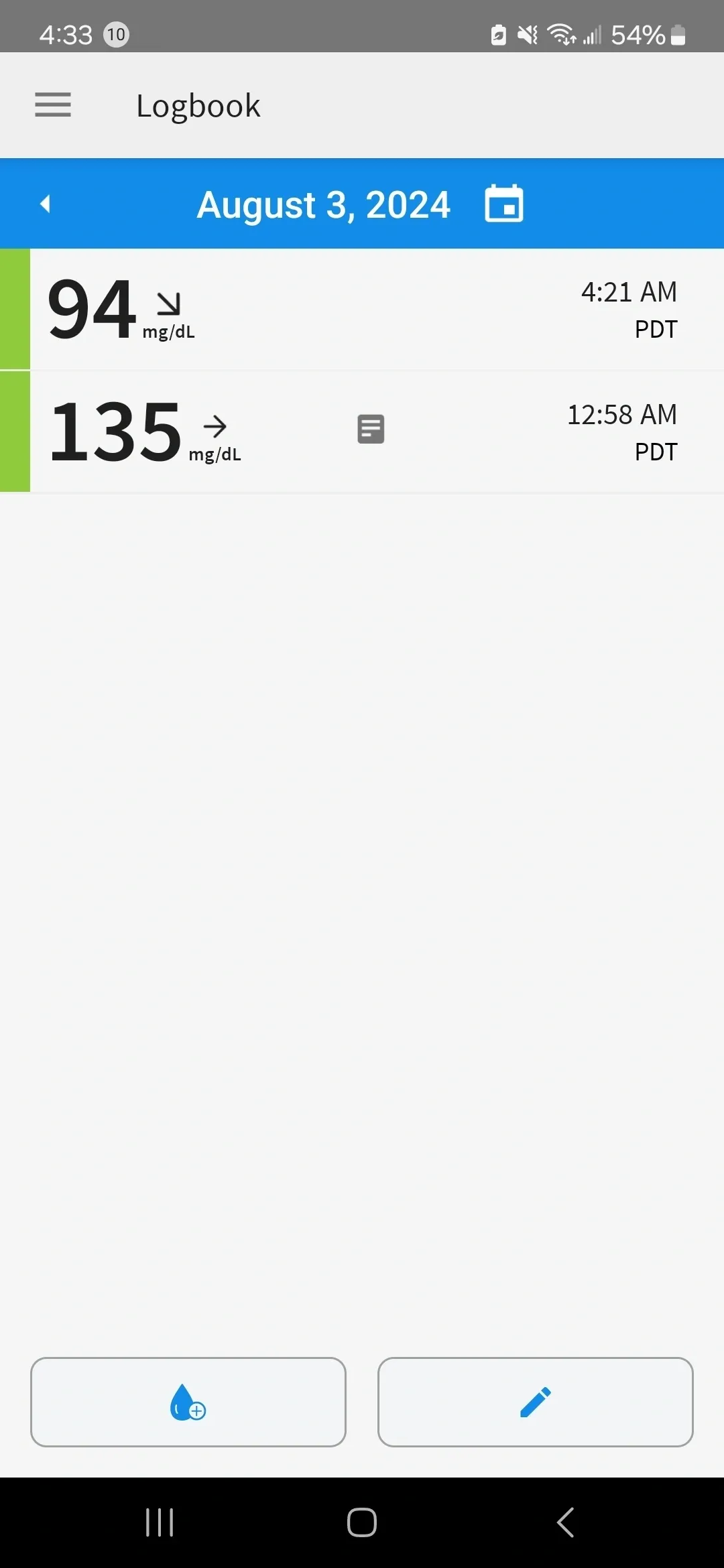
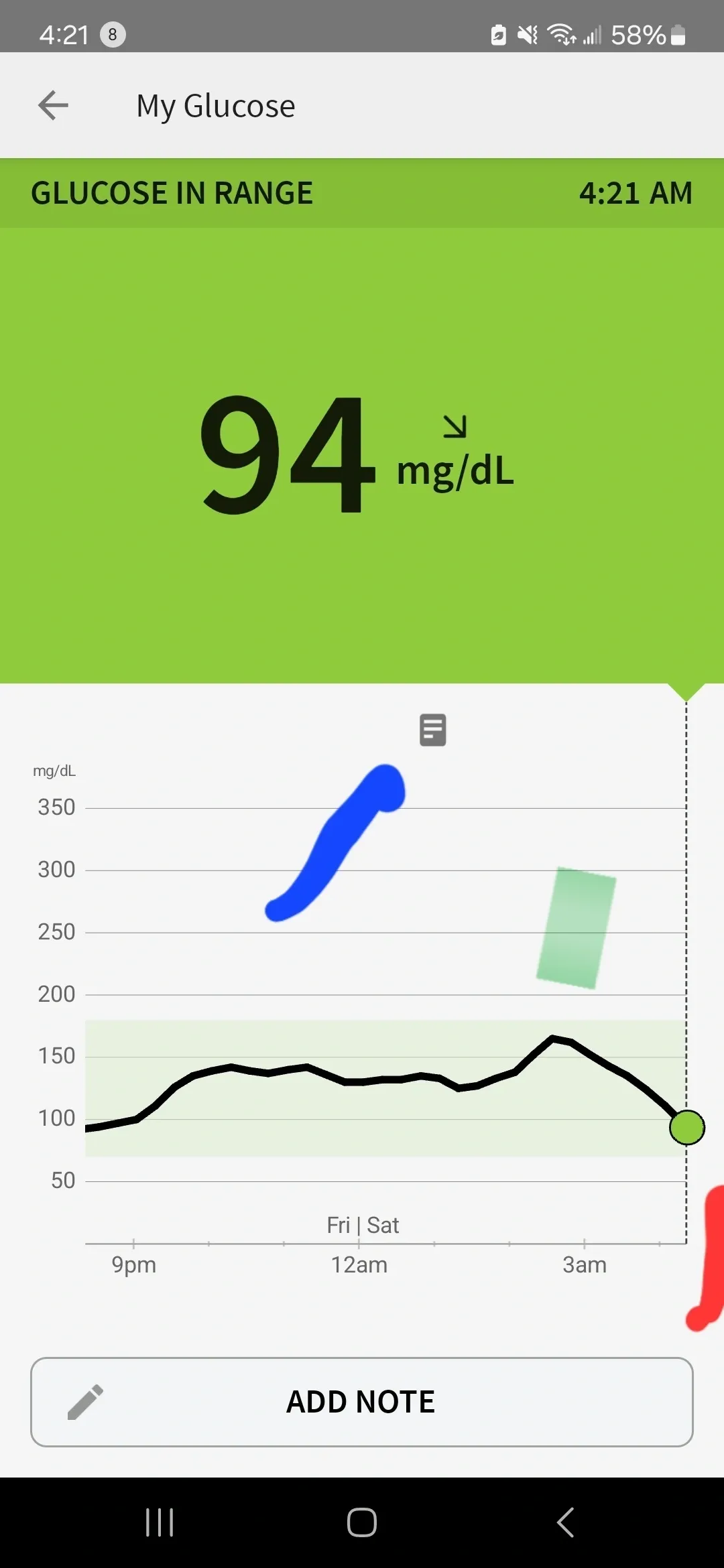
I went downstairs for my usual snack of an apple and peanut butter. While I wait for the snack to take effect, I deal with severe cramps and requiring visit to the bathroom.
The recovery process is anywhere between 2 – 4 hours and the crux of this article is what I go through between the two red lines shown in the image below.
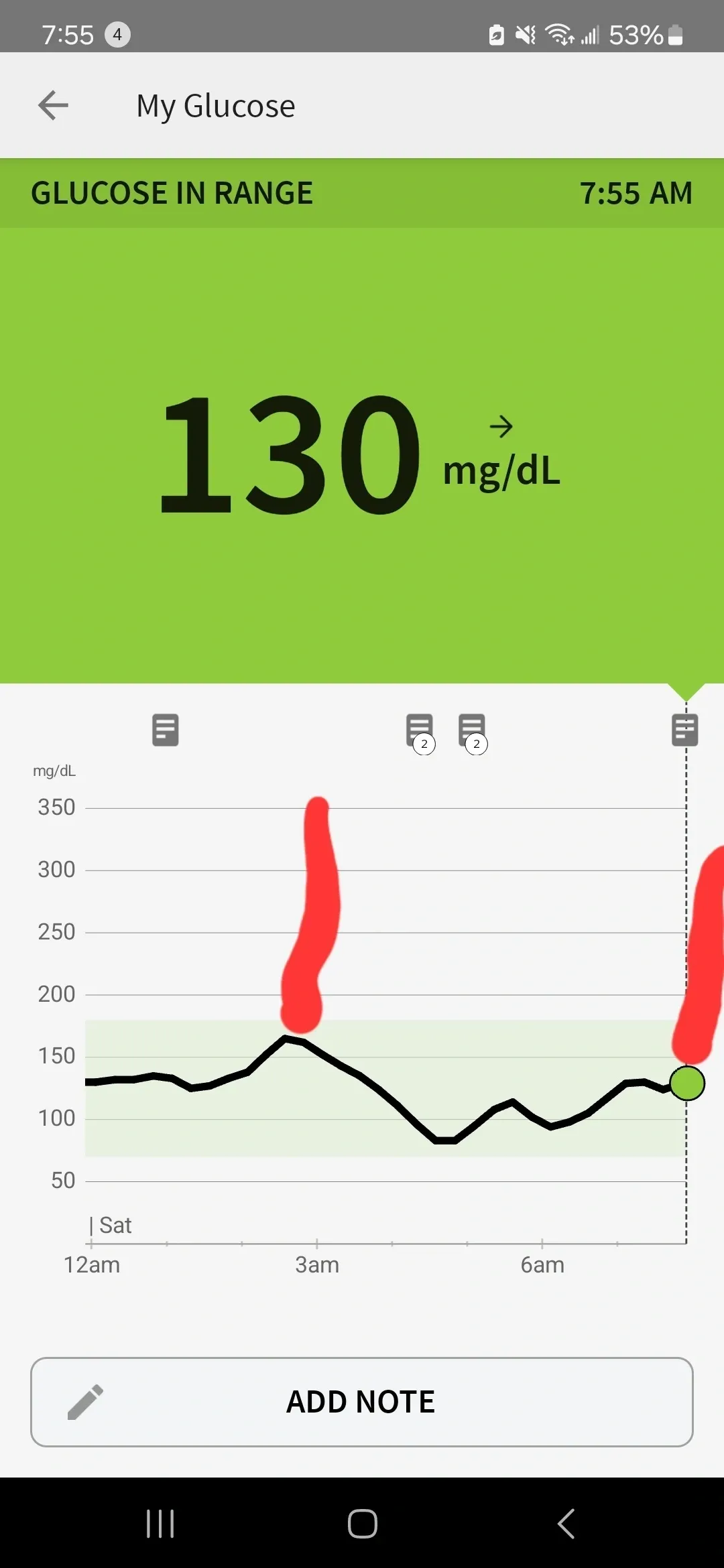
These were the texts that I sent to my friends explaining my reluctance to taken on a hike to Patagonia ‘O’ loop.
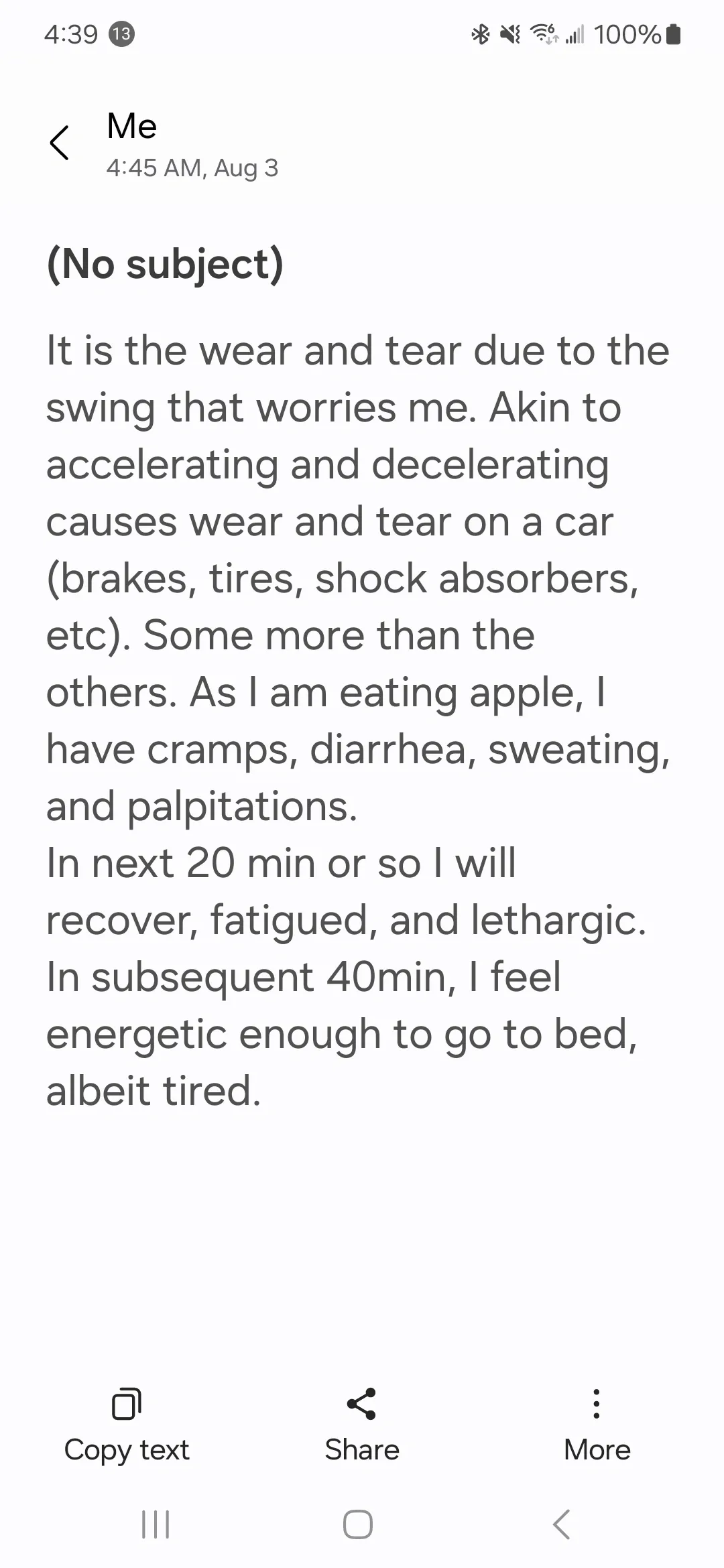
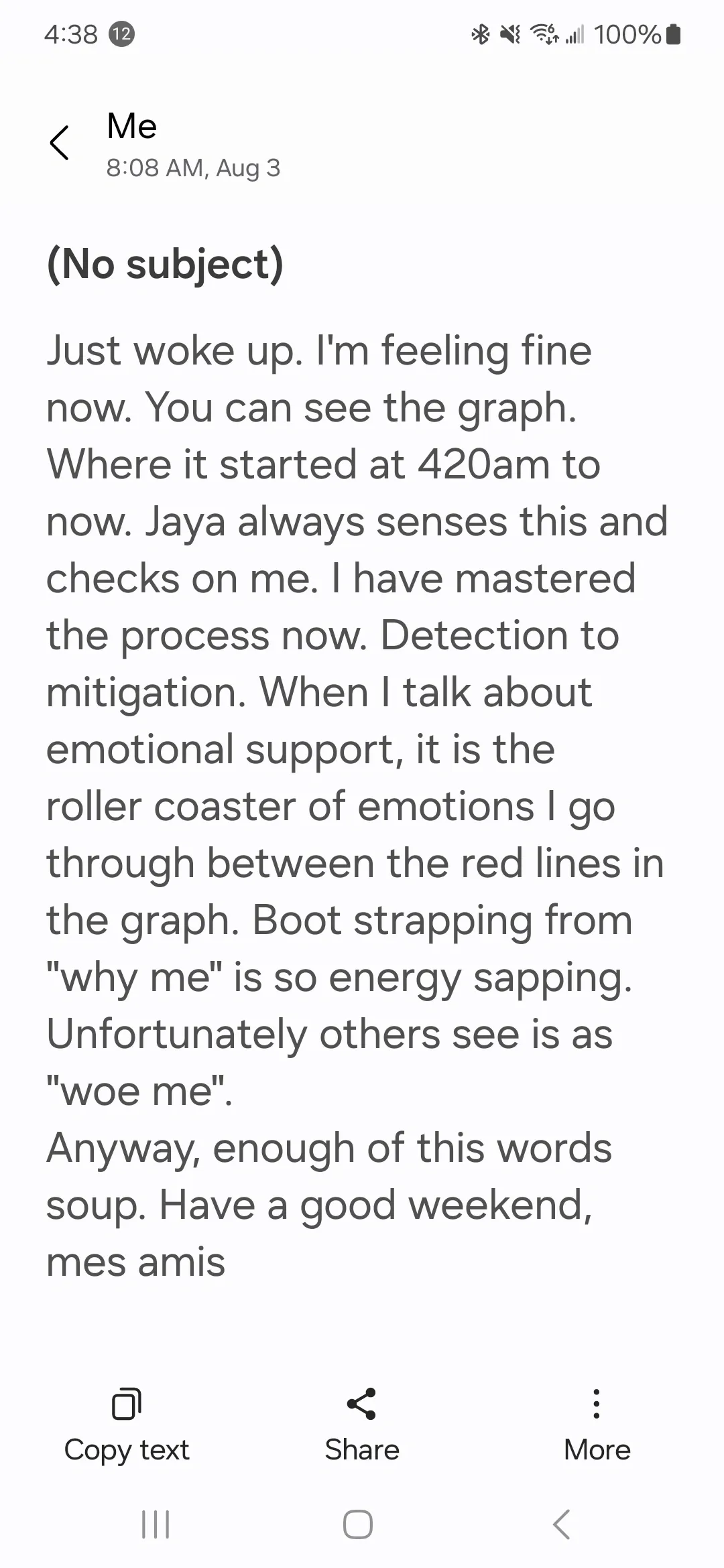
I want to HIGHLIGHT the silent suffering I endure. That is the 64-million-dollar question: Why me? The emotional roller coaster that I ride trying to find a satisfactory answer is intense. At times tears roll down, and at times you wonder is it worth the fight. The reason I want to highlight this side of suffering is that often looking from outside, very sympathetic and compassionate people label your lament as stop your “woe is me”. They only see the physical manifestations and if nothing is disabling let alone debilitating, their advice is not to be dramatic and deal with it.
I have highlighted the “Why Me” as a reminder to the loved ones of those who suffer from (long term) disabilities and/or debilitating effects to look beyond the specifics of those disabilities and ALSO focus on the emotional upheaval the individuals face on a continual basis. This impacts all of us who have to live with long term, if not lifelong disabilities, notwithstanding the severity or the seriousness of the ailment. This question haunts even the most ardent adherents of fatalism. Often times, it is the lack of awareness, rather than insensitivity and lack of compassion that makes us oblivious to this predicament, and worse yet, when it is deliberate.
I beseech you to provide that additional support and comfort to the unspoken pain and suffering of those who have to live with such limitations on a daily basis.