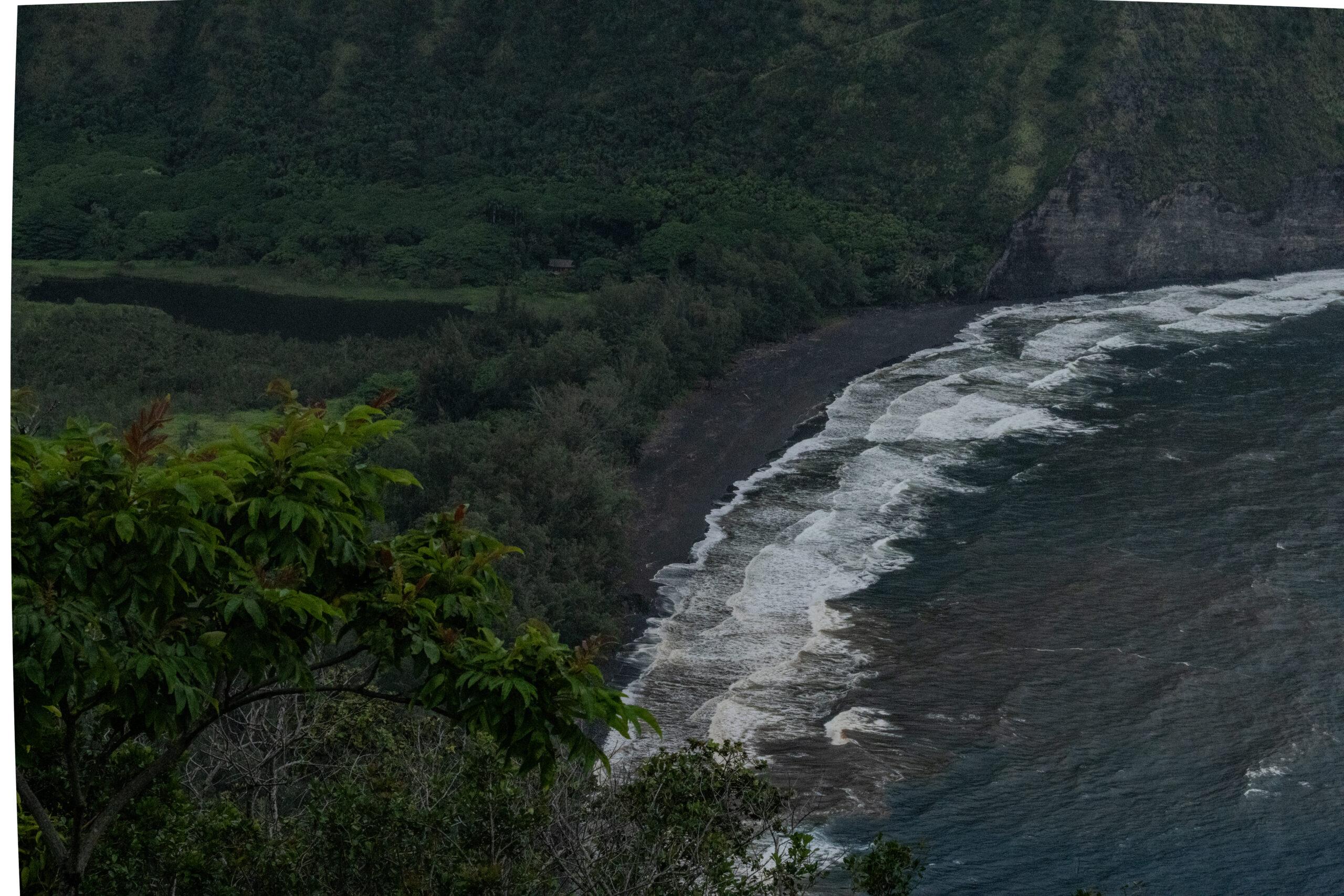
The phrase “death by thousand cuts” has a very macabre origin in Lingchi (Lingchi – Wikipedia) a Chinese form of punishment that involves brutal torture and execution. I will stay away from the literal definition of the phrase and discuss the metaphorical context of the phrase. In modern usage, “death by a thousand cuts” is often metaphorical, describing a situation where small, seemingly minor actions accumulate over time to cause significant harm or failure. For example, in business, it can refer to a company being gradually weakened by multiple small setbacks, or in strategy, it can describe a slow, secretive process of undermining an opponent. This figurative context emphasizes that while a single small “cut” may not be harmful, the cumulative effect of many small actions can be devastating.
The so far to me the last few years have been a roller coaster. More recently, on the upside my diabetes has been in good control, have been traveling far and wide and enjoying time with family and friends. On the downside beleaguered with health-related issues, personally afflicted with trigeminal mandibular neuralgia, family dealing with legal complications and friends faced and health issues. Though all of these have turned out to be manageable though the severity of some is still significantly high, my emotional wellbeing has taken a toll. Though each of these events could have been a big blow, the way it transpired was like I experienced a thousand cuts, each of them causing a sting, some deeper than the others, and the cumulative effect is far more intense.
There is a certain numbness I have experienced, and it is emotional in nature. I know these are time bound issues and there is very little I can do about it.
Coming to present day, with all that has transpired so far, I feel better but still have a nagging fear of creeping normalcy/normality. Don’t get me wrong, we all face umpteen issues, some trivial and others not so trivial on a day-to-day basis. We all know this is normal or is it, I wonder.
Creeping normality (also called gradualism) is a process by which a major change can be accepted as normal and acceptable if it happens gradually through small, often unnoticeable, increments of change. The change could otherwise be regarded as remarkable and objectionable if it took hold suddenly or in a short time span. American scientist Jared Diamond used creeping normality in his 2005 book Collapse: How Societies Choose to Fail or Succeed. Prior to releasing his book, Diamond explored this theory while attempting to explain why, in the course of long-term environmental degradation, Easter Island natives would, seemingly irrationally, chop down the last tree:[2]
I suspect, though, that the disaster happened not with a bang but with a whimper. After all, there are those hundreds of abandoned statues to consider. The forest the islanders depended on for rollers and rope didn’t simply disappear one day—it vanished slowly, over decades.
I hasten to add that this is not a plaintive cry for help. I am introspecting the creeping normalcy versus a stoic attitude towards life and its vagaries in full galore. I have been wondering if I have become inured to these cuts and masquerading that as a form stoicism or symbolically representing a grown man. I am exploring my behavioral changes and not venting any issues here. I have issues facing me every day no different any one of us. I am curious if my strategy so far to deal with the cuts is akin to frog in the water that is gradually being heated up to boiling point, and blissfully ignorant of the waiting disaster.
Stoicism is structured around three interconnected disciplines: logic, physics, and ethics. Logic involves reasoning and distinguishing truth from falsehood. Physics encompasses understanding the natural world and the universe’s rational order. Ethics, the central focus, teaches that virtue is the highest good and that emotional self-control, rational judgment, and moral integrity lead to a flourishing life (eudaimonia).
Key Stoic ideas include:
- Focus on what you can control: Accept external events as beyond your control and concentrate on your own actions and judgments
- Emotional resilience: Passions and anxieties are seen as misguided reactions that can be managed through self-discipline
- Virtue as the path to happiness: Wisdom, courage, justice, and temperance are the four cardinal virtues guiding ethical behavior
The creeping normality is the process and the landscape amnesia is the outcome bu framed as a cognitive and perceptual phenomenon—a “forgetting” of past conditions in favor of the current, altered baseline.
- Core idea: As change happens incrementally, people’s mental maps of “normal” shift, and the original state becomes “unnormal” or even “unthinkable.”
- Implication: This can lead to loss of historical memory and reduced ability to recognize when conditions have deteriorated beyond acceptable limits.
Here is a photo I have taken on Kona at sunset. Perfect lighting. I did the right thing by shooting HDR to capture bright sun and the shadows. But…

But like if is a bit of poison. This is my paper cut. I was experimenting with Milkyway shots the night before and changed the settings. I was smart enough to reset all the settings except switch from manual focus to auto focus. I spent almost half the evening till sun almost disappeared in this mode. This frog did not realize the water is boiling slowly and thought everything is fine. What a newbie mistake. I had that sailboat perfectly positioned but lost the opportunity.
Here is another example of slow boiling of water (my smug overconfidence perhaps). This is from the viewpoint at Waipao valley. The beach is black sand and water was clear. I took HDR image again to get most out of the landscape. I was so oblivious to the water heating up slowly around me, metaphorically speaking.
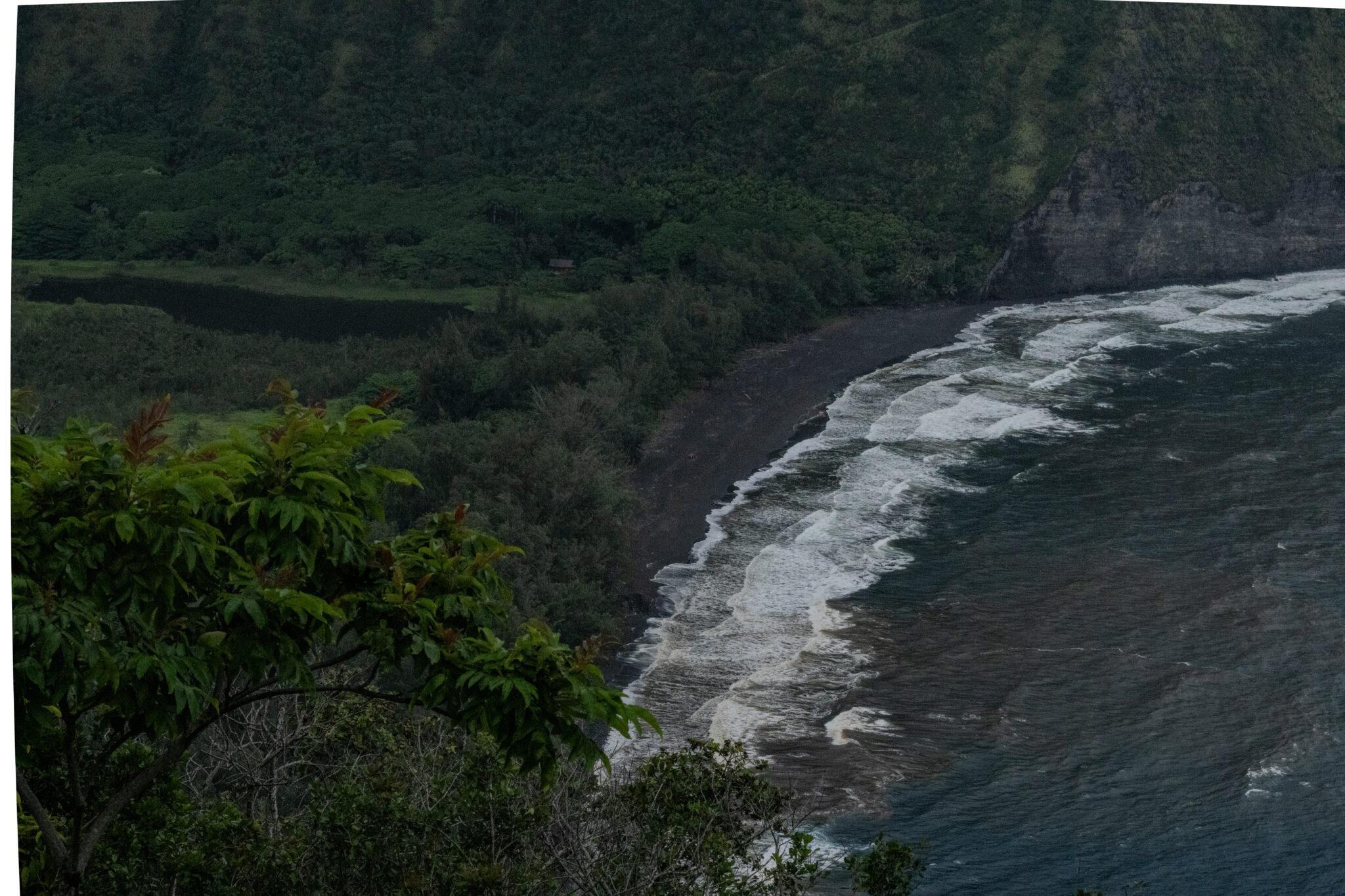
You will be forgiven if you think that this is not too bad. Take a look at the water closely as shown in the image below.
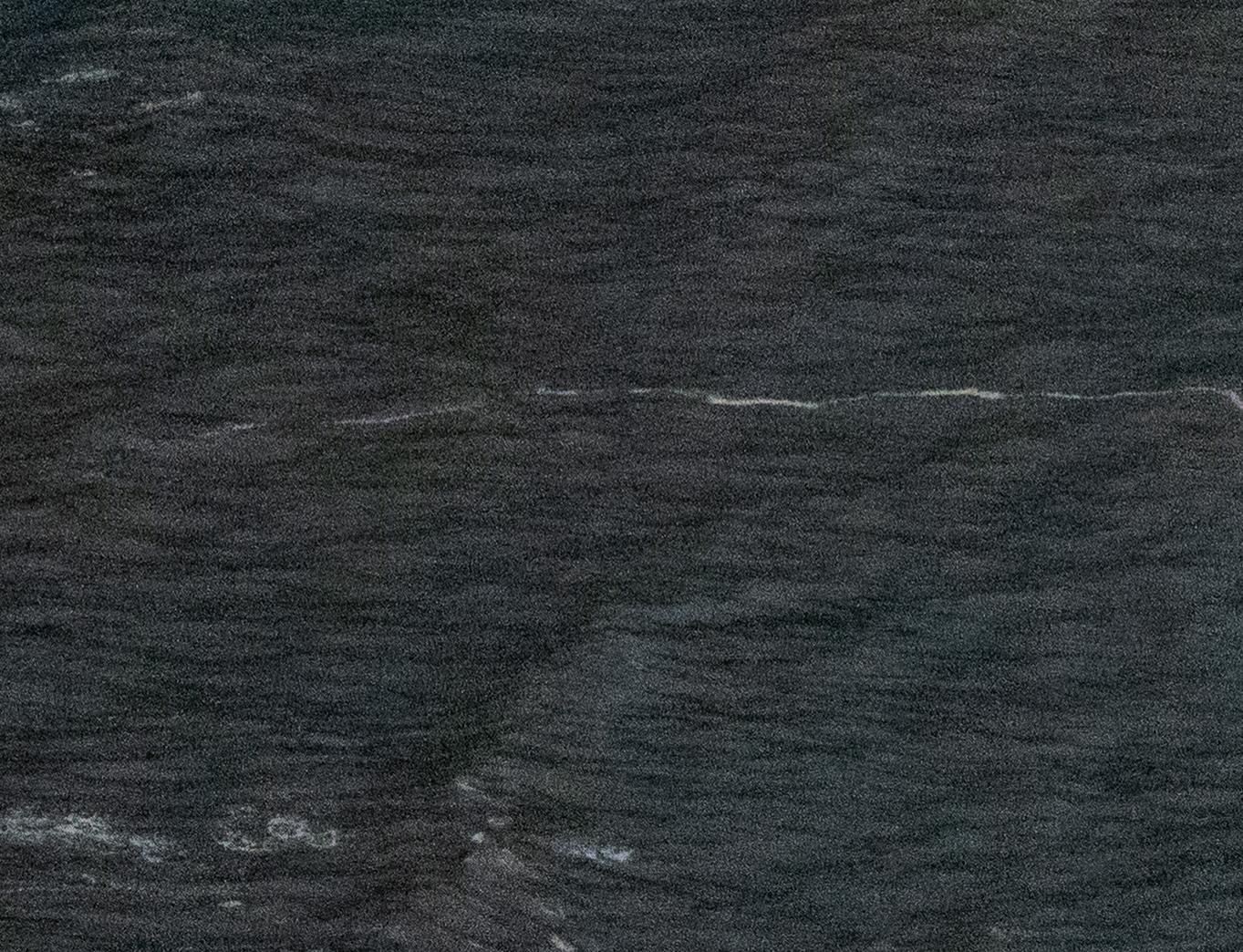
Absolute disaster. Why did it happen. I had my camera set to 1/2000s shutter, aperture at f18 and auto ISO, resulting in ISO 5000. The noise was due to high shutter speed and high aperture (I essentially choked the bright light) and forced camera to amplify the light. It was like one or two images that had this setting due to oversight. The entire session was done with these unrealistic settings. It was so dumb of me or was it a smug overconfidence that made me ignore what is going on (in the context of camera settings).
Epilog: Am I being stoic? – having a clear strategy to deal with issues I face by focusing on what I control, having that emotional resilience, that is not falling apart during the crisis.
Am I being a landscape amnesiac? – simply accepting the new norms and recalibrating myself to the new baseline.
I am beginning to worry if I am developing apathy for my passion for photography as a landscape amnesia. There quite a few of these cuts that don’t show to an observer, but they are there, slowly bleeding me. Maybe I should take them stoically?
I hope your summer has been bright and sunny so far.

I always enjoy reading your blog 🙂
Thank you,J.
So moral of the story – enough with the night sky pictures? 😄
Au contrare. What should have been daytime, albeit cloudy pictures turned out to be night shots, as if I hadnt enough night shots.